
Blue Mountains Solar
Springwood, Winmalee, Blaxland, Glenbrook, Faulconbridge, Lawson, Hazelbrook, Wentworth Falls, Leura, Katoomba, Blackheath and Mount Victoria.
Bushfire-zone rules, heavy tree shading and storm outages shape every design up here.
Trusted by homeowners and businesses beyond the metro fringe. CEC-accredited installers. Panels, batteries, and heat pumps designed for bushfire-prone ridgelines, Hawkesbury flood plains, and Macarthur’s new-build estates.



Outer Greater Sydney has a different power bill problem to the inner suburbs. Properties are larger, and blocks in Camden, Kurrajong and Wollondilly run bore pumps, sheds, workshops and pool equipment. Blue Mountains homes need real heating through a genuinely cold winter. New estates through Oran Park and Gregory Hills were built with dark roofs, ducted air conditioning, and often a token 6.6 kW system that was never sized for how the household actually lives.
Outages make it worse. Storms across the escarpment and the Hawkesbury bring lines down regularly, and restoration takes longer than it does in Parramatta. Out here, the appeal of solar and battery storage is not just the bill. It is not losing the fridge, the pump and the internet for two days.
These regions are excellent solar territory. Macarthur and the Hawkesbury record some of the strongest irradiance in the basin, which lines up neatly with peak cooling load. Larger roofs, sheds and outbuildings allow system sizes a terrace could never carry.
Renewable Industries installers understand what changes out here: bushfire-prone land requirements across the Blue Mountains, mounting decisions on Hawkesbury flood-affected properties, three-phase supply and pump loads on acreage, Endeavour Energy export rules, and limited roof area on small-lot new builds. Every system is designed around the property it goes on.
Renewable Industries offers a full suite of solar and clean energy services for residential, rural, and commercial clients across the Blue Mountains, Hawkesbury, Macarthur, and Wollondilly. Every solar system is designed specifically for your property, energy usage, and budget.
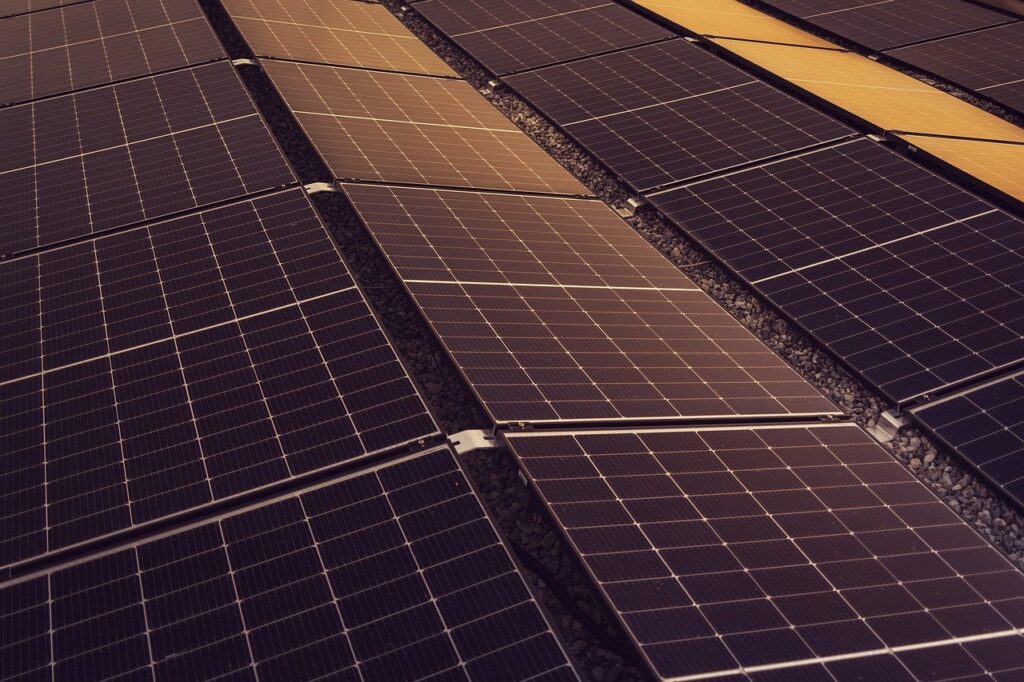
Custom-designed rooftop solar systems for Greater Sydney homes, from Springwood and Winmalee through to Camden, Oran Park, and Campbelltown. Sized to your usage, roof, and budget.
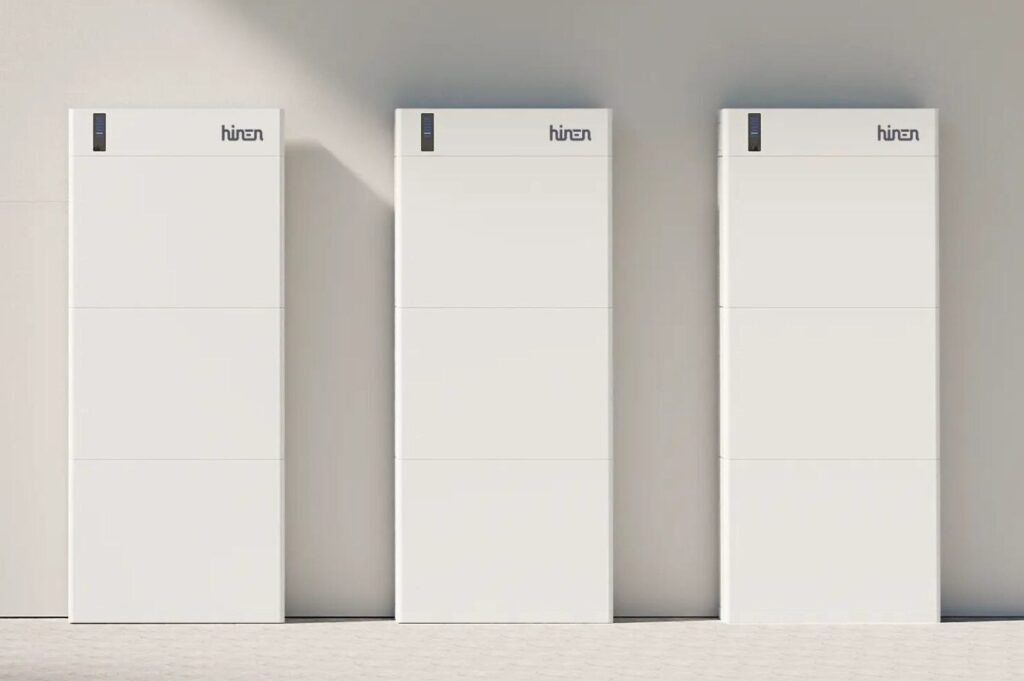
Solar systems for Greater Sydney businesses, including light industrial premises around Smeaton Grange and Ingleburn, agricultural and rural operations across the Hawkesbury.
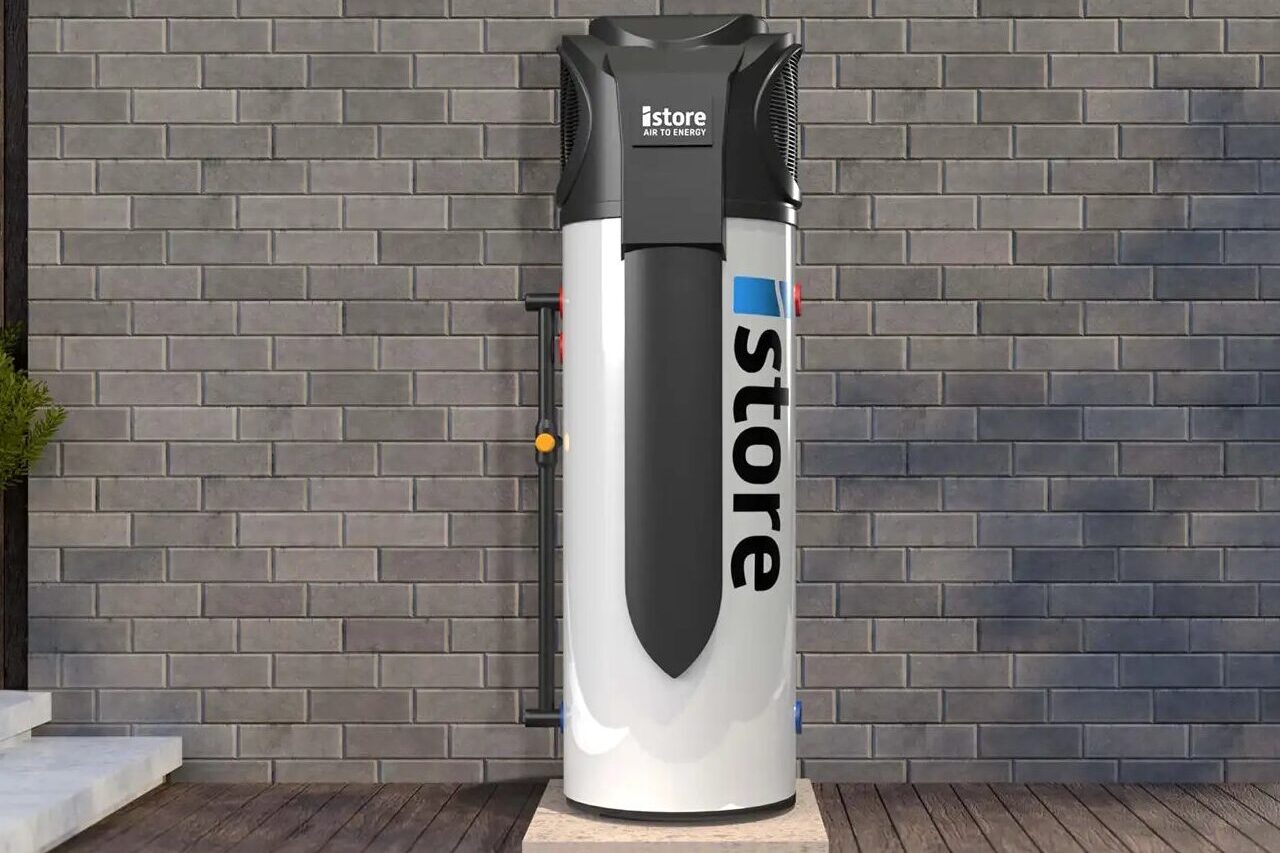
Store your solar generation for use at night or during outages. Particularly valuable across the Blue Mountains, Hawkesbury, and Wollondilly where storm outages are common and restoration takes longer.
We install solar across the outer ring of Greater Sydney — from the upper Blue Mountains, through the Hawkesbury, and out to the Macarthur and Wollondilly regions.
Springwood, Winmalee, Blaxland, Glenbrook, Faulconbridge, Lawson, Hazelbrook, Wentworth Falls, Leura, Katoomba, Blackheath and Mount Victoria.
Bushfire-zone rules, heavy tree shading and storm outages shape every design up here.
Windsor, South Windsor, Richmond, North Richmond, Wilberforce, Pitt Town, Glossodia, Freemans Reach, Kurrajong, Kurmond and Bligh Park.
Flood-affected homes, sheds, bore pumps and three-phase farm loads are standard work for us.
Camden, Narellan, Mount Annan, Currans Hill, Harrington Park, Gregory Hills, Oran Park, Catherine Field, Leppington and Smeaton Grange.
New-build estates with dark tile roofs and builder-grade systems that are usually undersized.
Campbelltown, Glen Alpine, Blair Athol, Ambarvale, Ruse, Kearns, Eagle Vale, Minto, Ingleburn, Macquarie Fields and Bradbury.
Some of the hottest summers in the Sydney basin, so cooling load and older systems cost you.
Picton, Tahmoor, Thirlmere, Bargo, Buxton, The Oaks, Menangle and Douglas Park.
Large blocks, rural sheds and long outage restoration times make battery backup worth it.
Renewable Industries:
Phone: 02 4062 7593
Email: info@renewableindustries.co
Accreditation: Clean Energy Council (CEC) Accredited Installer
Renewable Industries services the Greater Sydney and the broader Singleton Shire LGA. Our team regularly works across all of the following areas:
|
|
|
|
|
|
|
|
|
|
|
|
|
|
Not sure if we reach your address? Call us on 02 4062 7593. If you’re in the Greater Sydney, we service your area including rural and acreage properties.
Getting solar with Renewable Industries is a straightforward, fully managed process. From your first call to a fully operational system, here is how it works:
Step 1
We come to you. On larger and rural properties we assess the roof, sheds, switchboard, supply type, and pump or workshop loads in person rather than estimating from satellite imagery.
Step 2
We design around your property. Bushfire-prone land requirements, canopy shading, flood-level equipment placement, dark tile roof temperatures, and outbuilding runs are all accounted for.
Step 3
Itemised quote with STCs applied. You see the real net cost upfront, including any switchboard upgrade, longer cable runs, or export limit implications.
Step 4
CEC-accredited crew completes the install, typically in a single day for standard residential systems. Larger rural and multi-building installs may take two. No subcontracting.
Step 5
We manage the Endeavour Energy connection application, metering, and compliance paperwork. Most Greater Sydney customers are fully operational within 4 to 7 weeks.
Renewable Industries has been delivering solar and renewable energy solutions across NSW for years. We’re not going anywhere. If you need support in 10 years, we’ll still be here.
Plenty of solar companies claim to cover Greater Sydney, then quote your Katoomba or Picton job from a desk in the inner city and send whoever is available. Here is why homeowners and businesses across the outer regions choose Renewable Industries:
Renewable Industries has been delivering solar and renewable energy solutions across NSW for years. We are not going anywhere. If you need support in 10 years, we will still be here.

In most cases, no. Residential solar generally falls under exempt development within the NSW State Environmental Planning Policy (Exempt and Complying Development Codes), so no DA is required from Blue Mountains City Council, Hawkesbury City Council, Campbelltown City Council, Camden Council, or Wollondilly Shire, provided standard conditions are met such as panels not projecting more than 300mm above the roof surface. The exceptions worth knowing about out here are heritage items, properties within scenic or environmental protection zones in the Blue Mountains, and installations on bushfire-prone land, where equipment selection and placement carry additional considerations. We confirm your planning and bushfire status as part of every quote.
It affects how the system is built rather than whether you can have one. Most of the Blue Mountains LGA is mapped as bushfire-prone land, and that shapes decisions around cable protection, isolation point accessibility for emergency services, roof penetration detailing, and equipment enclosure selection. Battery placement in particular needs care and should be assessed against separation and enclosure requirements rather than installed wherever is convenient. We handle these as design inputs and confirm the compliance path before installation.
Often yes, but it needs honest assessment rather than a satellite estimate. Tree canopy across the Mountains is the single biggest variable in system performance up here, and it changes through the day and across seasons. We assess shading on site and design accordingly, using panel-level optimisers or micro-inverters so a shaded section does not drag down the whole string, and placing the array on the roof planes that genuinely earn their output. If a property truly cannot support a worthwhile system, we will tell you that rather than sell you one.
Endeavour Energy covers all of these regions, including the Blue Mountains, Hawkesbury, Penrith, Camden, Campbelltown, and Wollondilly. This differs from inner and northern Sydney, which sits with Ausgrid. Endeavour Energy sets its own export limits and approval conditions for solar and battery systems, commonly 5 kW per phase for residential connections with larger systems approved subject to conditions or export control. We confirm the applicable limit for your address and manage the entire connection application on your behalf.
Yes, and the panels themselves are on the roof and well clear of any flood level. The consideration is ground-level and wall-mounted equipment: inverters, isolators, switchboards, and batteries. On flood-affected properties around Windsor, Pitt Town, Richmond, and the river flats we assess known flood levels and mount equipment accordingly, or relocate it to a higher structure where practical. This is worth getting right at design stage rather than discovering it after an event.
Solar panels lose a small amount of efficiency at very high temperatures, a factor known as the temperature coefficient. This is genuinely relevant in Campbelltown, Camden, and the Macarthur region, which record some of the hottest days in the Sydney basin, and dark tile roofs on newer estates push panel temperatures higher still. We select panels with a low temperature coefficient, ensure adequate roof clearance for airflow, and keep inverters out of direct afternoon sun. Annual output remains strong, and the heat that drives your cooling load is the same heat driving strong generation.
Frequently, yes. Builder-supplied systems across the South West growth corridor are usually sized to meet a compliance requirement rather than to cover how the household actually uses power, particularly once ducted air conditioning, a pool, or an EV enters the picture. In many cases adding panels and upgrading the inverter is better value than replacing the system outright, and retrofitting a battery captures the generation you are currently exporting for very little return. We assess what you have before recommending anything.
After federal STC rebates are applied, a quality 6.6 kW residential system typically costs between $4,500 and $8,000, depending on panel brand, inverter type, and roof complexity. A 10 kW system generally sits in the $7,000 to $11,000 range, and rural or acreage properties running pumps and sheds commonly go to 13 kW or well beyond. Adding a quality 10 kWh battery currently adds roughly $8,000 to $12,000 before the federal battery rebate. Longer cable runs, multi-building systems, steep Mountains roof access, and switchboard upgrades can add cost, and we itemise all of it rather than hiding it in a headline price.
Federal Small-Scale Technology Certificates (STCs) reduce your upfront installation cost directly, and all of Greater Sydney sits within STC Zone 3. The scheme phases down annually and ends in 2030, so installing earlier delivers greater savings. The federal Cheaper Home Battery Program also provides a rebate on eligible battery systems, reducing annually from 2026. Additional incentives may apply for connecting an eligible battery to a Virtual Power Plant. We calculate your exact entitlements and apply them directly to your quote.
Most standard residential installations are completed in a single day, with assessment and quote within 2 to 3 business days and installation scheduled within 2 to 4 weeks of acceptance. Endeavour Energy connection approval takes a further 2 to 4 weeks, so most customers are generating power within 4 to 7 weeks of first contact. We service these regions as standard rather than as an exception, and any genuine access or cable run costs are itemised in your quote upfront, never added afterwards.
Renewable Industries helps homes, farms, and businesses across Greater Sydney switch to solar, including rural and acreage properties. We offer free assessments, itemised quotes, and honest, no-pressure advice tailored to your property and existing setup.