
Solar Illawarra
Wollongong, Shellharbour, Kiama, Albion Park, Dapto, Jamberoo, Gerringong and the Illawarra rural hinterland.
Trusted by rural and regional NSW property owners. CEC-accredited installers. Panels, batteries, and heat pumps designed for real rural loads, weak supply, and long outages.


Rural NSW solar is a different problem to a suburban rooftop. Loads are bigger and less predictable: irrigation pumps, cool rooms, dairy plant, compressors, multiple buildings on one supply. Supply is often weaker, with single-phase or SWER connections and hosting capacity limits that cap what you can export. And when something goes down, restoration takes days, not hours.
That is why solar pays better on a rural property than in town, and why so many rural systems are installed badly. A quote written from satellite imagery will either underdeliver or fail approval.
The upside is roof space. House and shed roofs allow system sizes that actually cover daytime operational load, and pumping, refrigeration and processing all run during generation hours. Add a battery and the outage problem eases.
Renewable Industries assesses on site, sizes against your real load, and confirms what your network will approve before you sign anything.
Renewable Industries provides a complete range of solar and clean energy services for rural homes, farms, and regional businesses. Every system is designed against your actual load profile, supply type, and property layout, not a template.
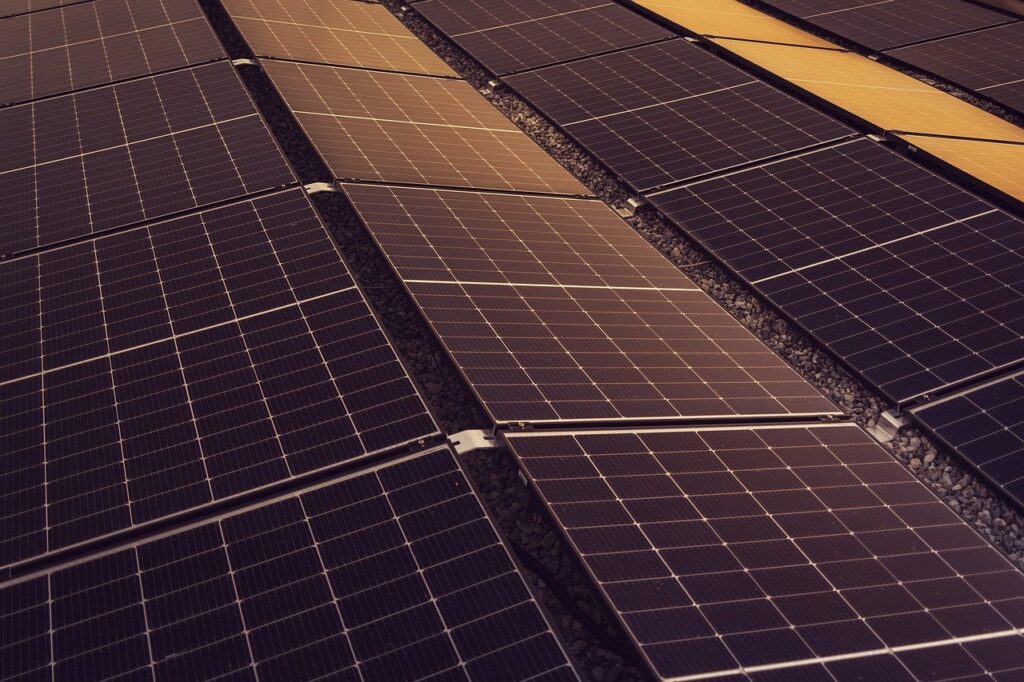
Custom-designed rooftop solar for rural homes, acreage, and lifestyle blocks. Sized to your usage, roof, and budget, including properties with sheds, water pumping, and multiple buildings on one supply.
Solar systems for rural and regional businesses, including farm and agricultural operations, rural tourism and accommodation properties, and commercial premises and compliance.
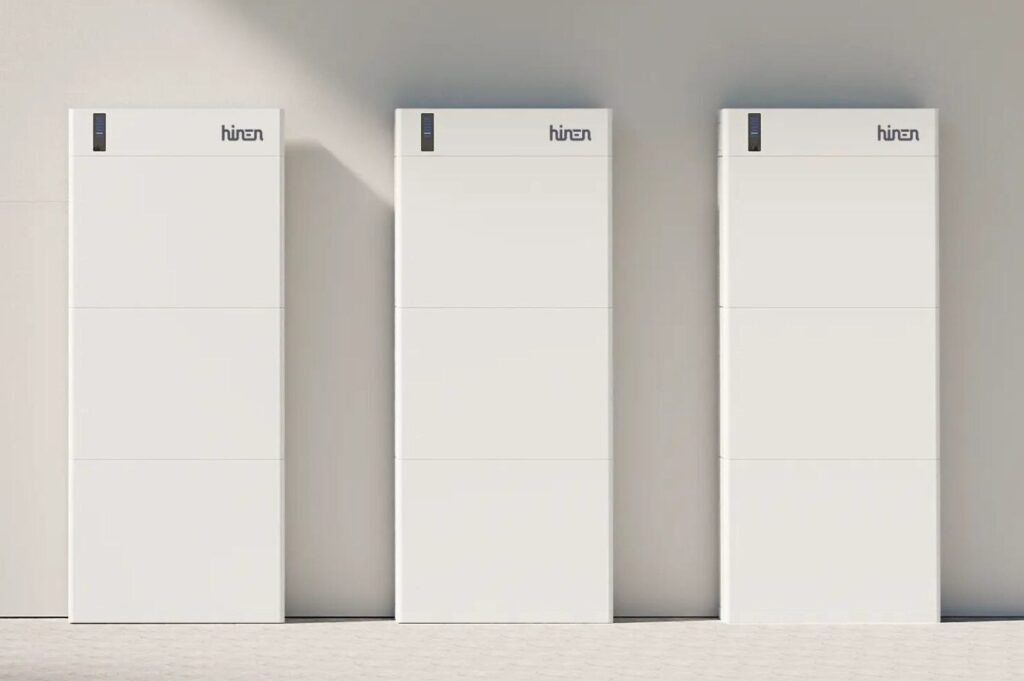
Store your solar generation for use at night or during outages. On long rural feeders where restoration can take days, this is often the highest-value part of the system. Federal battery rebates currently.
We install solar on rural and regional properties across a wide area of NSW — from the coastal escarpment, through the Southern Highlands, and out into the inland farming districts.
Wollongong, Shellharbour, Kiama, Albion Park, Dapto, Jamberoo, Gerringong and the Illawarra rural hinterland.
Bowral, Mittagong, Moss Vale, Berrima, Bundanoon, Robertson, Exeter and surrounding acreage.
Singleton, Muswellbrook, Scone, Merriwa, Denman, Dungog, Gresford and surrounding grazing country.
Mudgee, Gulgong, Dubbo, Wellington, Coonabarabran, Gunnedah, Narrabri and surrounding cropping properties.
Taree, Wingham, Gloucester, Bulahdelah, Krambach and the surrounding valleys.
Renewable Industries:
Phone: 02 4062 7593
Email: info@renewableindustries.co
Accreditation: Clean Energy Council (CEC) Accredited Installer
Renewable Industries services the Rural NSW and the broader Singleton Shire LGA. Our team regularly works across all of the following areas:
|
|
|
|
|
|
|
|
|
|
|
|
|
|
Not sure if we reach your address? Call us on 02 4062 7593. If you’re in the Rural NSW, we service your area including rural and acreage properties.
Rural jobs carry more variables than suburban rooftops, so the process front-loads the assessment. From your first call to a fully operational system, here is how it works:
Step 1
We come to you and walk the property. Roof and shed structures, switchboard and supply type, pump and plant loads, cable run distances, and shading.
Step 2
We confirm your distributor, supply configuration, and the export limit you can realistically expect before designing anything.
Step 3
System sized against your actual load profile and priorities, with STCs applied. Itemised quote including cable runs, sub-boards, mounting, and any switchboard work.
Step 4
Our own CEC-accredited crew completes the install, with no subcontracting. Standard rural residential systems are usually a single day.
Step 5
We manage the network connection application, metering, and compliance paperwork, then walk you through monitoring and what to do if something faults.
Rural property owners have usually been burned by someone, or know a neighbour who has. Here is why they choose Renewable Industries:
Renewable Industries has been delivering solar and renewable energy solutions across NSW for years. We are not going anywhere. If you need support in 10 years, we will still be here.

NSW has three distributors and which one you sit with materially affects your solar design. Essential Energy covers most of regional and rural NSW, including the Central West, North West, New England, Riverina, Far West, and much of the North Coast. Endeavour Energy covers the Illawarra, Southern Highlands, Wollondilly, Blue Mountains, and Western Sydney. Ausgrid covers Newcastle, the Hunter, the Central Coast, and inner and northern Sydney. Each sets its own export limits, application process, and approval timeframes. We confirm your distributor and supply configuration during the assessment and manage the connection application on your behalf.
SWER stands for single wire earth return, a low-cost distribution method used extensively across rural NSW where properties are far apart. SWER connections have limited capacity, and that limits how much solar you are permitted to export back into the network, sometimes to a very small figure and occasionally to zero in heavily constrained areas. It does not stop you installing solar and it does not stop the system saving you money, because the value shifts almost entirely to self-consumption and storage rather than feed-in credits. What it does mean is that the export limit must be confirmed before the system is designed, not after. Any installer who quotes your SWER property without asking about your supply is guessing.
Yes, and on rural properties with heavy daytime load you usually should. Export limits cap what you can send back to the network, not what you can generate and use on site. A property running pumps, refrigeration, or plant during daylight hours consumes most of its generation directly, which is where the savings come from now that feed-in tariffs are low. We design to your consumption profile and apply export control at the inverter where the network requires it, so you get the benefit of the larger system while staying compliant with your connection agreement.
Our installations are grid-connected solar, battery storage, and heat pump hot water. If your property has no grid connection at all, contact us with the details and we will tell you honestly whether we can help or point you toward a specialist, rather than take on a system type we are not the right fit for. If you already have a connection, adding battery storage is almost always better value than disconnecting from it, because the grid acts as unlimited backup that you only pay for when you actually draw on it.
Roof-mounted residential solar generally falls under exempt development within the NSW State Environmental Planning Policy (Exempt and Complying Development Codes), so no development application is needed provided standard conditions are met. Rural properties raise two additional considerations. Heritage items and environmentally sensitive or scenic protection zones carry extra conditions in some LGAs, and larger systems on outbuildings may need the structure assessed. Larger commercial and agricultural installations have their own thresholds. We confirm the planning pathway for your specific property and proposed system as part of the quote rather than assuming.
Only if the system is designed to, and this is the single most common misunderstanding in rural solar. A standard grid-connected solar system shuts down during an outage for safety reasons and will not power anything. To keep equipment running you need a battery with backup capability and an essential circuits sub-board wired so the critical loads, typically the house, freezers, and water pumping, are carried through the outage. Motor loads such as pumps need the battery and inverter sized for their start current, not just their running load. On long rural feeders where restoration takes days, this capability is usually worth more than the bill savings.
Extremely well, because the load profile matches generation. Pumping, refrigeration, aeration, and processing largely happen during daylight hours, so a well-sized system offsets consumption directly rather than exporting it for a low tariff. The design work is in the detail: pump start currents, duty cycles, three-phase configuration, cool room compressor cycling, and how load is distributed across multiple buildings and sub-boards. We size against measured or metered load data where it is available rather than an annual kWh total, because an annual figure hides exactly the peaks that determine whether the system performs.
Often yes, and on rural properties it is frequently the better roof. Sheds and machinery buildings usually offer larger unshaded areas with a simple roof plane, which makes for an efficient array layout. The considerations are the structural condition of the shed, the cable run distance back to your main switchboard, and how the load is distributed across buildings and sub-boards. We assess all of that on site and quote whichever roof or combination of roofs genuinely suits the property.
Federal Small-Scale Technology Certificates (STCs) reduce your upfront cost directly, and rural NSW spans more than one STC zone. Much of the state sits in Zone 3, while far western NSW falls into a higher-entitlement zone, meaning a larger rebate for the same system. The scheme phases down annually and ends in 2030, so installing earlier delivers more. The federal Cheaper Home Battery Program provides a rebate on eligible battery systems and reduces annually from 2026. Commercial and agricultural installations may access different mechanisms including Large-scale Generation Certificates above certain thresholds, and some agricultural energy efficiency programs operate periodically. We calculate your exact entitlements and apply them to your quote.
Any genuine travel or access cost is itemised in your quote upfront, never added later. On the warranty question, we would rather answer it honestly than win a job we cannot support. We service a defined area properly, including return visits, and if your property sits beyond that we will tell you at the first phone call. An installer who cannot realistically return for a fault in year four has not saved you anything, whatever the quote said.
Renewable Industries helps rural homes, farms, and businesses across NSW manage energy costs with free property assessments, itemised quotes, and clear, no-pressure advice tailored to your needs.